
Letters on the Threshold
Private letters that set the stage for Quil Blackwood’s role in the Knights

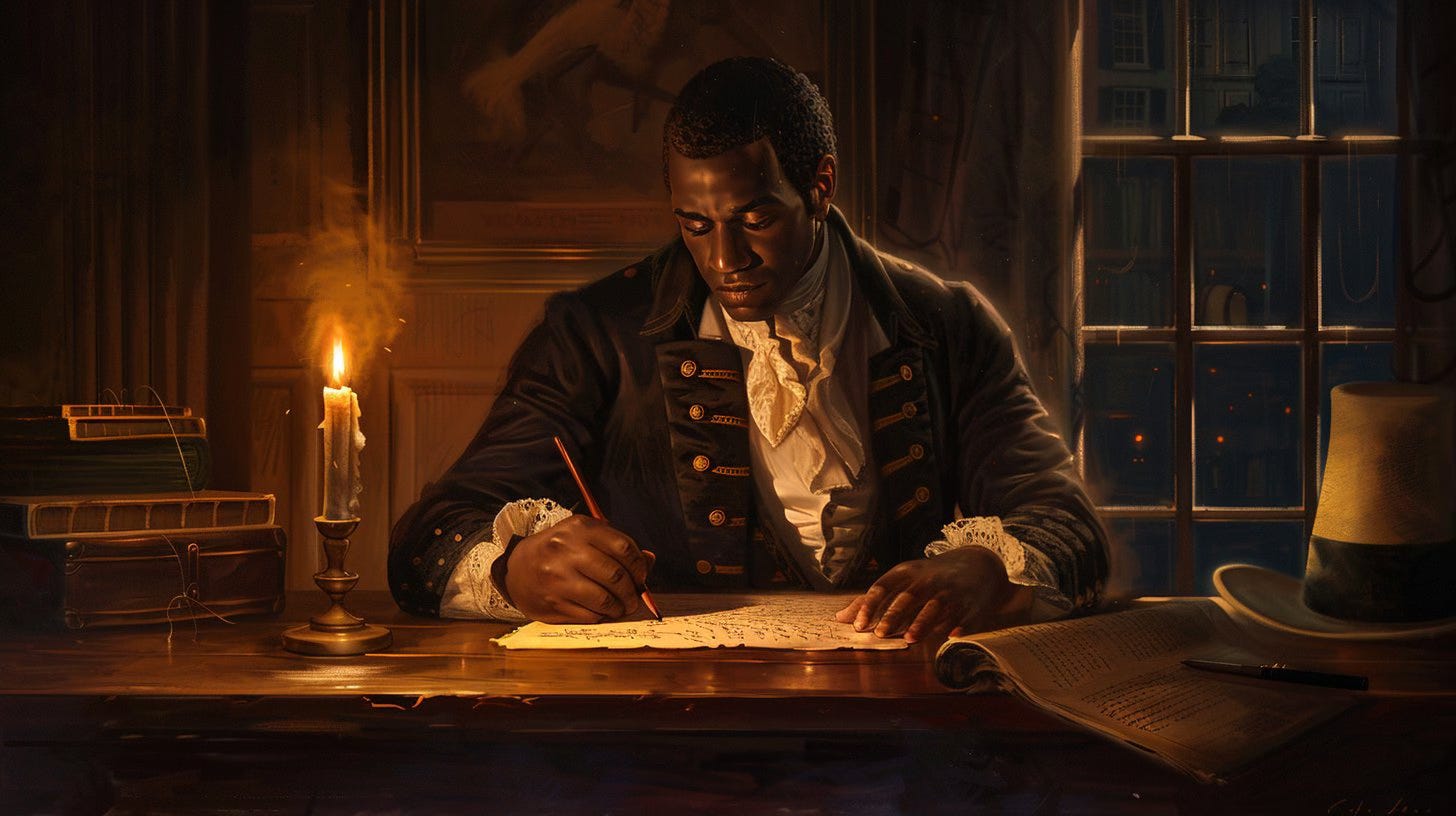
These letters come from the days just before Aquila “Quill” Blackwood is drawn into the hidden service of the Knights of Washington. The order has existed quietly for years, but here we see George Washington, his trusted servant William Lee, and tavernkeeper Thomas Rowe in private correspondence as they work to secure a valuable silversmith—one who can keep Washington’s knights armed against the supernatural threats they face.
York, Pennsylvania
6ᵗʰ April 1772
To Mr. George Washington,
at Mount Vernon, Virginia
Sir,
I write to inform You that I have arrived in York and found the Reports which reached us to be, in substance, true. A Man by the Name of Aquila Blackwood is presently held in the Gaol here under the Charge of Murdering his intended, Miss Keziah Askew. The Scene was most violent, and the Evidence against him plain to those unwilling to look further. He was discovered in his own House, covered in Blood, and unresponsive save for one utterance—that he had acted to preserve his Life. He now speaks no more of it.
I have made discreet Inquiries and examined the Matter to the Extent Time allows. Mr. Blackwood is a Silversmith of rare Ability. His Craft is of a Quality suitable to the particular Work we require, and I am satisfied he may answer the Need left by the Death of Mr. Winthrop.
Pursuant to the Authority granted me for such Cases, I have made Offer to Mr. Blackwood: that in Exchange for his Service to You, the Charges against him may be allowed to fall away. I have employed a mixture of Persuasion and quiet Entreaty with the local Officers and believe the Affair may soon be resolved without further Noise.
We shall depart for Alexandria without Delay. I expect our Arrival no later than the 11ᵗʰ instant, God willing. The Man is reluctant, but I judge he will not flee, nor resist the Terms. He bears the Marks of Guilt and Grief both, but his Talents are plain, and he is not without a certain Sturdiness of Mind.
I shall report further upon our Return.
I remain, Sir,
Your most obedient & humble Servant,
W. Lee
Mount Vernon
10ᵗʰ April 1772
To Messrs. William Lee and Thomas Rowe,
at the Blackthorn Tavern, Alexandria
Gentlemen,
Your Letter of the 6ᵗʰ instant hath reached me in good order, and I am obliged to you both for your Diligence in the Affair concerning the Silversmith now in your Custody.
Mr. Blackwood's Circumstances are regrettable, yet the Necessity of our Cause leaves little Room for Sentiment. If he be as capable as Mr. Lee reports—and I have no Reason to doubt it—then we must lose no Time in setting him to useful Labour.
Let the Man be housed in suitable Quarters, and his Tools restored to him. If he lacks for Materials, you are authorized to supply them from the usual Stores. I expect you will observe him closely in these first Weeks, not only for the Quality of his Work but for any Signs of instability or deception.
For the present, he is not to be informed of the full Nature of our Endeavour. Say only that he is in Service to my household and that his Skills are required for delicate commissions of a private kind. Let his Duties be consistent with this Pretence, and speak nothing of the Order nor its Aims.
Should his Conduct warrant greater Confidence in Time, the matter of further Instruction may be revisited. Until then, I urge Caution. A man with such a past may be of use to us—but he may also bring danger in his train.
You are both trusted in this. Do as you judge best within these bounds, and keep me apprised.
I remain, Gentlemen,
Your most humble & obedient Servant,
G. Washington
Alexandria, Virginia
22ᵈⁿ April 1772
To Mr. George Washington,
at Mount Vernon
Sir,
I write to inform You of a breach at the Blackthorn that ought not be taken lightly. Mr. Blackwood was set upon two nights past by an old compatriot of ours. The intent was plain and unprovoked. It shames me to say the thing happened within my own walls.
I intervened before it turned fatal, but only just. The man struck with purpose, not drink, and not madness. Whether it was personal grievance or something deeper, I cannot yet say.
As for Mr. Blackwood—he is steady. Works hard, asks little, keeps to his corner. But there’s something that clings to him. I’ve known men that draw bad luck, but this feels heavier. Like something followed him here, or came with him in his skin.
Still, the work is good. He does what’s asked and more. You’ll not find a better hand with silver in Alexandria just now. I will keep him close, and keep watch. But I will not have blood spilled under my roof again—not from one of ours.
I am, Sir,
Your humble and obliged servant,
T. Rowe